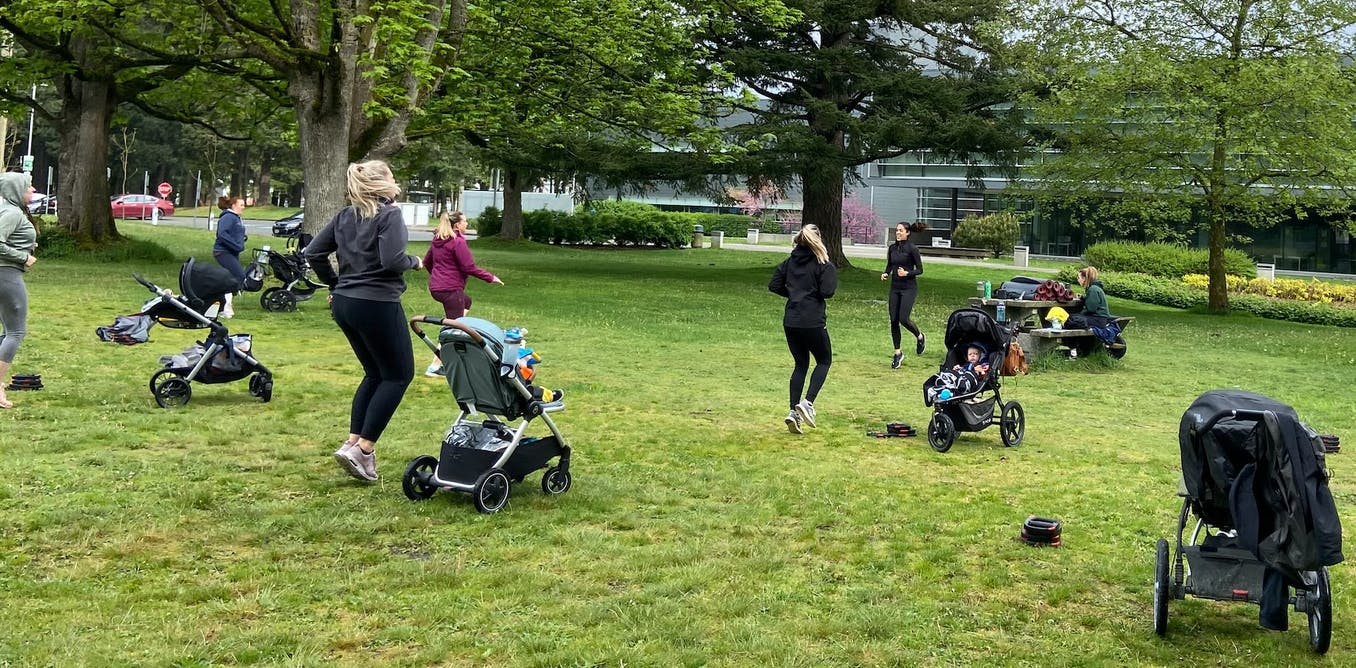
Girls who interact in bodily exercise within the postnatal interval report higher psychological well-being than those that are much less bodily lively. Writer supplied
The prolonged period of the COVID-19 pandemic means extra girls will give start in the course of the pandemic, and a few could have multiple being pregnant and postpartum expertise. As bodily exercise researchers who advocate for train as medication, we’re finding out the influence of train on well-being of postpartum girls in the course of the pandemic.
The COVID-19 pandemic has affected everybody’s day-to-day lives, however moms have been particularly challenged. Girls have skilled a adverse influence on psychological well-being and bodily exercise behaviour, with moms being particularly weak with elevated child-care tasks. New moms within the postpartum part are at an extra drawback due the heightened problem of caring for infants.
Postpartum challenges
The postpartum part is commonly outlined as the primary six weeks after childbirth when post-pregnancy bodily modifications reminiscent of uterine shrinking and hormonal fluctuations are the best. These modifications can even tremendously have an effect on the psychological well being of recent moms — the prevalence of despair is roughly 15 per cent. Nevertheless, it’s attainable for brand spanking new moms to proceed to expertise post-partum results for as much as one 12 months.
Because the onset of COVID-19, psychological well being points have elevated amongst postpartum girls, with 41 per cent reporting despair and 72 per cent reporting moderate-to-high nervousness (in comparison with 15 per cent and 29 per cent pre-pandemic).
Pre-pandemic challenges reminiscent of sleep deprivation, lack of self-care or medically sophisticated deliveries are actually exacerbated. For instance, girls who gave start in the course of the pandemic might have skilled lowered direct maternal care, an absence of a house help system because of visiting restrictions and an absence of in-person breastfeeding help.

Exercising in nature has been related to reductions in nervousness and stress, whereas being outdoors has been proven to extend enjoyment of train.
(Shutterstock)
Bodily exercise is an efficient remedy for nervousness and despair and could also be useful for brand spanking new moms. As little as a single group train session of 45 minutes can enhance nervousness ranges in girls with out a historical past of psychological sickness. Girls who interact in bodily exercise within the postnatal interval report higher psychological well-being than those that are much less bodily lively.
Nevertheless, bodily exercise ranges are decrease within the postpartum interval than previous to being pregnant. That is regardless of the American School of Obstetrics and Gynecologists recommending that ladies slowly return to bodily exercise 4 to 6 weeks after giving start and work their approach as much as the final bodily exercise tips of 150 minutes of reasonable to vigorous bodily exercise per week. Limitations within the postnatal interval embrace lowered motivation because of an absence of social help and childcare tasks.
Pandemic-safe train options
At 18 months into the pandemic with no sign of ending, and secure indoor alternatives for train much less accessible, mothers are in want of innovation. An out of doors atmosphere has the benefit of being simply accessible and COVID-19 secure, and having further useful results. As an illustration, exercising in nature, often called “inexperienced train” has been related to reductions in nervousness and stress, whereas being outdoors has been proven to extend enjoyment of train.
With the excessive diploma of security in an out of doors atmosphere, may we help new mothers with secure bodily exercise programming open air? We had been inquisitive about offering mothers with the instruments they should return to bodily exercise safely and guarantee they’ve the added competence to interact in bodily exercise with a brand new child. If we would like mothers to thrive on this new regular we have to assist them discover their approach again to motion and optimum psychological properly being.

Writer Iris Lesser operating together with her two kids in a stroller.
(I. Lesser), Writer supplied
Working with a crew on the College of the Fraser Valley, within the spring of 2021 we enrolled 21 girls who had been lower than 9 months postpartum in an eight-week, biweekly out of doors group train program. As a mom of two (together with one born within the midst of the pandemic), Iris (one of many co-authors of this text) had each private {and professional} curiosity find methods to satisfy the bodily exercise wants of recent moms.
Partaking in this system in an out of doors location with bodily distancing allowed girls to totally take part with out threat of publicity to COVID-19. Moms reported a lower in despair after this system, together with an enchancment in motivation and in assembly primary psychological wants. Perceived stress and nervousness additionally had been lowered, however not considerably.
Ongoing analysis
These findings recommend that new moms might expertise an enchancment in total well-being after partaking in group train. This type of group train addressed plenty of the widespread boundaries to train participation in the course of the postnatal part. This contains the chance to deliver their little one to this system, partaking with different new moms and this system being designed particularly for postpartum health. To find out the long-term results on bodily exercise, we plan to conduct a followup at six months.
Supporting postpartum girls with bodily exercise alternatives might assist them train extra within the postpartum interval. This will additional enhance psychological well-being on this at-risk inhabitants.
Nevertheless, there may be nonetheless a big hole within the literature concerning girls’s postnatal bodily exercise experiences. We’re at present recruiting girls lower than 12 months postpartum to finish an internet survey to assist us study extra.

Scott Lear has acquired funding from the Canadian Institutes of Well being Analysis, the Coronary heart and Stroke Basis, Novo Nordisk, Hamilton Well being Sciences and the Robert Wooden Johnson Basis.
Iris Lesser doesn’t work for, seek the advice of, personal shares in or obtain funding from any firm or organisation that will profit from this text, and has disclosed no related affiliations past their tutorial appointment.